Politics
Texans: Keep calm and check your ballot
Texas voters can review the printed paper ballot before scanning, and a poll worker can issue a replacement if a marked race is wrong.
By Staff · October 23, 2026
The videos moved through Texas group chats and social feeds in the final stretch of early voting: a Tennessee voter taps one name on a touchscreen, and a different one lights up. A South Carolina clip shows a similar stumble, and the same accusation trailed machines in Florida and Texas. Within hours, the clips carried a darker caption — machines are switching Democratic selections to Republican ones, or vice versa.
Fact-checkers and election officials who reviewed the incidents found no credible evidence that any machine deliberately changed a party selection during the 2026 midterms. The reported mismatches, they said, came down to unintended touches, user error, and touchscreen calibration or alignment problems. The Associated Press reported that election experts say such “vote flipping” reports are common during early voting and do not signal rigged machines. But you have nothing to worry about — just check your ballot before you cast it. Here's how.
The Secretary of State's office in Texas said it had not received reports of the ballot-switching problems described in other states, and state officials pointed voters to their ability to inspect their printed paper ballot before casting it.
The paper slip is the safeguard
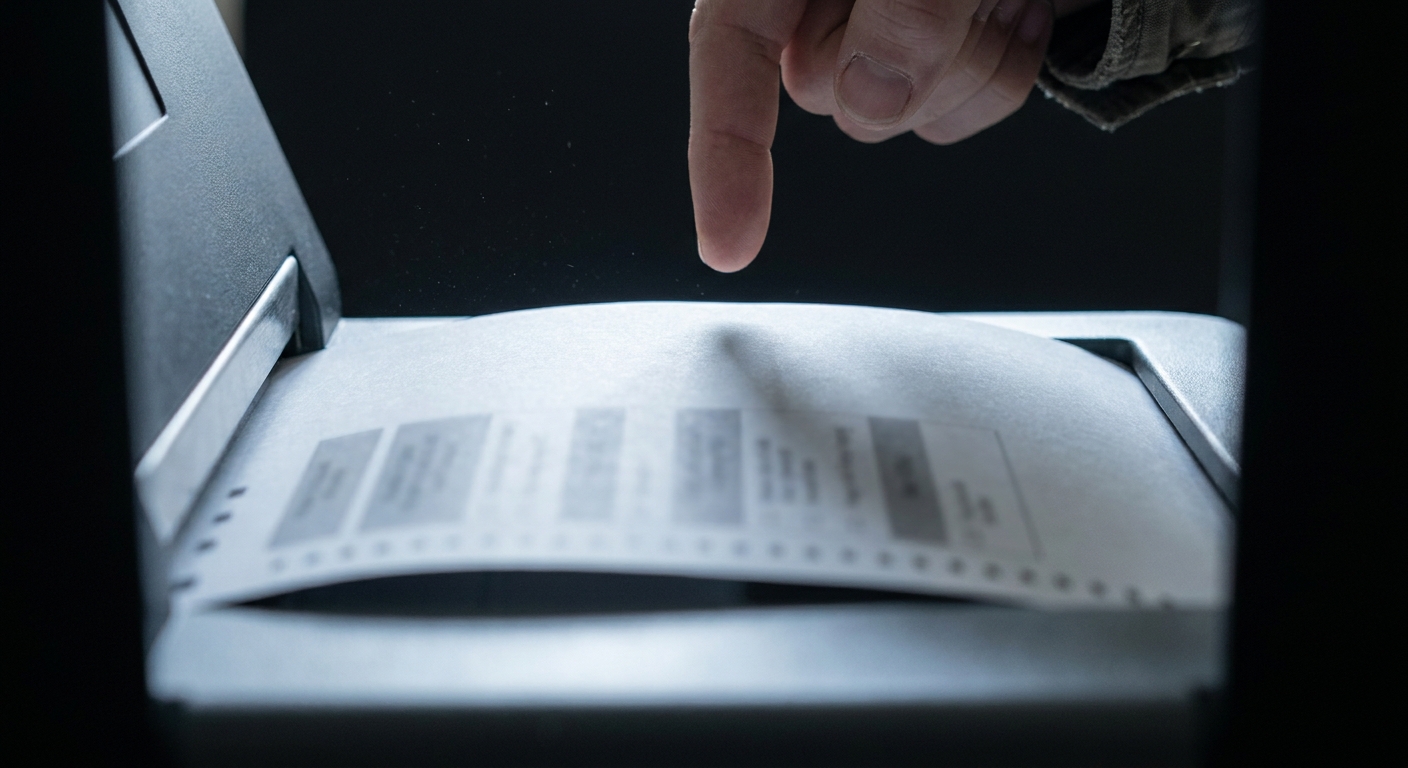
The machinery of a Texas vote is simpler than the viral clips suggest. Early voting is under way across the state ahead of the November 3 general election, running from October 19 through October 30. A Texas voter makes selections on an electronic ballot-marking device, or BMD, which prints those selections onto a paper ballot. The BMD generally does not itself count the vote — the paper ballot it prints is what gets scanned and counted. That makes the printed slip the moment when a vote is still entirely in the voter's hands: it can be read, checked, and fixed before it is cast.
What to check
In Hidalgo County, Elections Administrator Hilda Salinas has walked local voters through the routine, according to KRGV: make selections, review them on screen before submitting, then check the printed paper ballot before scanning it, with election clerks on hand if anything looks wrong.
Before depositing the ballot, read the printed slip and check each race, the candidate names, and the marks by your selections. If a selection is wrong or missing, it is something you can catch yourself in that moment — not something you are helpless to change once it is printed.
The reason to check right then is unforgiving: once a ballot goes into the scanner, it is cast and cannot be changed. Any problem has to be raised with a poll worker before casting it.
The check is not theoretical. Bexar County officials said some Bexar County voters in split school-district areas received a "ballot style" listing the wrong set of races and propositions — a wrong list of contests, not a machine flipping a single selection. They said they corrected the issue and would review returned ballots to determine any impact.
How to fix a bad ballot
If the printed ballot does not show the selections you intended, the fix is immediate and does not require you to leave. Do not cast or deposit it; flag the problem and call over a poll worker or election officer. Under the procedures for electronic voting systems, the defective ballot may be spoiled and replaced with a fresh one for you to fill out, review, and cast — all before you leave the polling place, at no cost and with no penalty.
The fix is written into Texas law. Under Texas Election Code § 64.007, the "Spoiled Ballot" provision, a voter who mismarks, damages, or otherwise spoils a ballot in the process of voting is entitled to a new one by returning the spoiled ballot to an election officer. A voter may receive no more than three ballots total — the original plus up to two replacement ballots — and the officer records each spoiled ballot in a register with the voter's name and the spoiled ballot's number, then deposits it in "ballot box no. 4."
If a ballot is spoiled because of an election officer's administrative error — a ballot that printed incorrectly or an equipment malfunction — it does not count against the three-ballot limit, according to the Secretary of State's Register of Spoiled Ballots.
None of this requires trust in a machine or in the latest claim making the rounds. Because a Texas vote produces a paper ballot a voter can read and verify with their own eyes, that personal review is the most reliable protection there is — stronger than any online assertion about what a machine did. Election expert David Becker attributes most alleged vote-flipping incidents to understandable human error rather than to what the machines are actually doing.
The takeaway is a habit, not a fear: checking the printed ballot before it is cast is an ordinary, fixable civic chore, and a wrong selection earns a fresh ballot on the spot, free and without penalty. That, more than any rumor, is what protects a Texas vote at the polls this November.